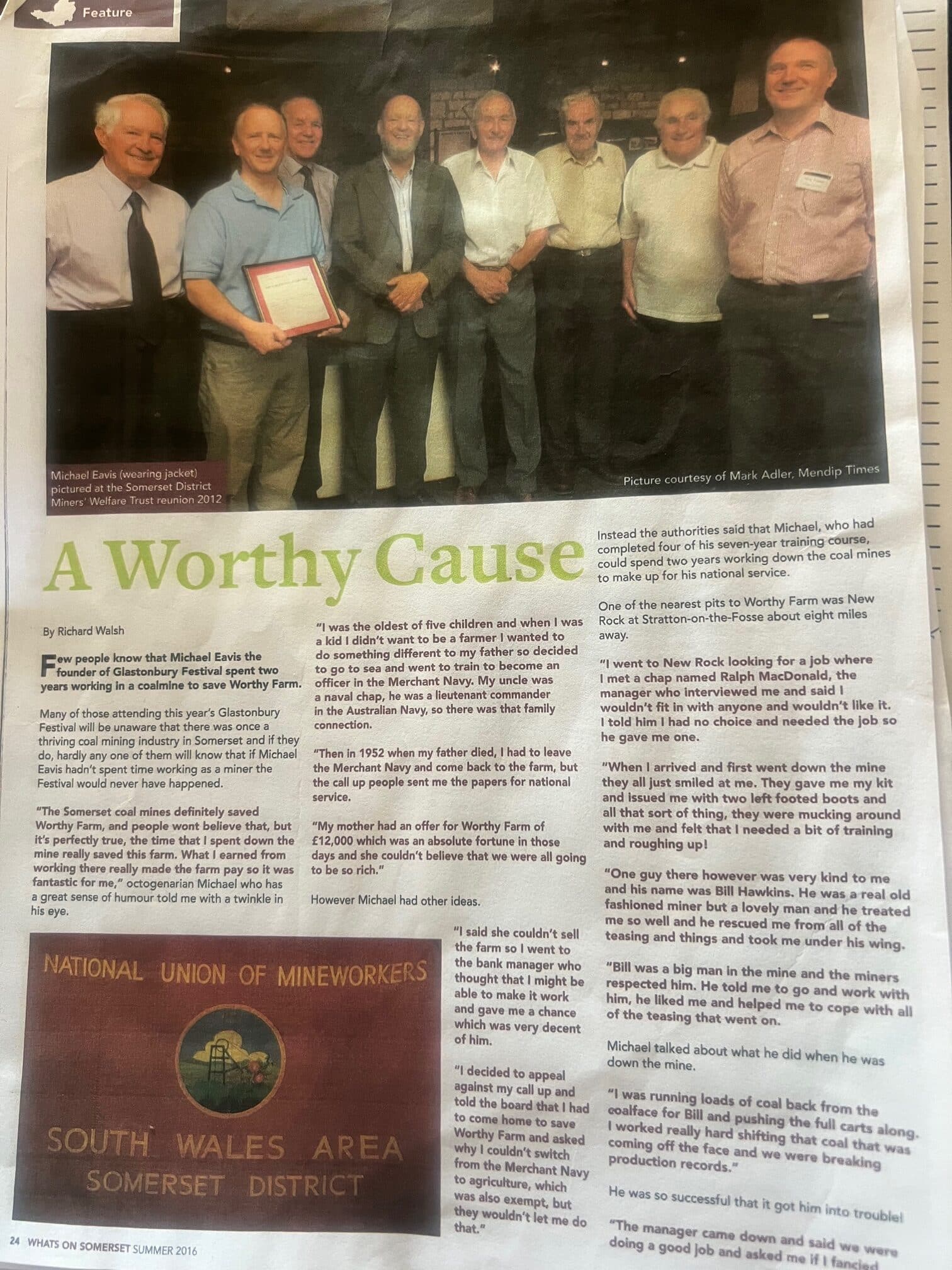
Few people realise that Sir Michael Eavis, the founder of Glastonbury Festival, spent two years working underground in a Somerset coal mine. It was those wages, earned in difficult and demanding conditions at New Rock colliery in Stratton-on-the-Fosse, that helped save Worthy Farm and ultimately made the world-famous festival possible.
Sir Michael’s work in the mines
The story was told in a feature titled “A Worthy Cause,” written by Richard Walsh and published in What’s On Somerset in the summer of 2016. In it, Sir Michael recalled how he came to work in the mines after his father passed away in 1952. He’d been training to become an officer in the Merchant Navy, but with the farm at risk of being sold, he returned home determined to keep it going.
Twelve thousand pounds for Worthy Farm
His mother had received an offer of twelve thousand pounds for Worthy Farm, a fortune at the time, but Michael persuaded her not to sell. He went to the bank manager, who gave him a chance to make the farm work, and then appealed against his national service call-up. The authorities agreed that he could spend two years working in the coal mines as an alternative.
New Rock colliery was one of the nearest pits to Worthy Farm, around eight miles away. Sir Michael recalled arriving at the mine and being met with good-natured teasing from the experienced miners, who issued him two left-footed boots and made it clear he’d need toughening up. A miner named Bill Hawkins took him under his wing, and the two worked together running coal back from the face and pushing full carts along the underground roadways. The work was hard, the conditions hot and dusty, but the camaraderie among the men left a lasting impression.
The mining wages made a real difference to Worthy Farm
Sir Michael used his pay to buy calves, growing the herd from thirty to sixty, and the free coal that came with the job was delivered straight to the farm. He worked five days a week from eight in the morning until five in the afternoon, with Saturdays as double time when he could get it. His day would start at half past four milking the cows before riding his James 197 motorbike to the pit, and he’d return in the evening to milk them again, sometimes by torchlight in the winter months.
A proud supporter of the Somerset District Miners Welfare Trust
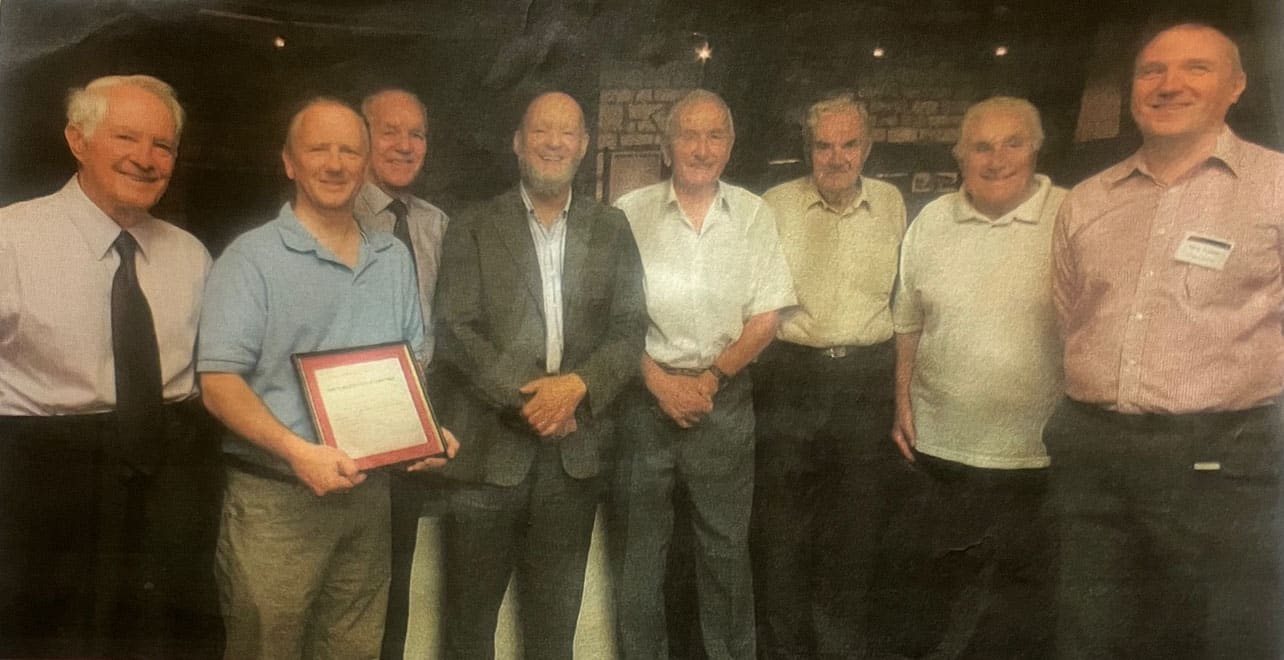
The experience changed him in ways that went beyond farming. Sir Michael spoke openly about how the political outlook of the miners influenced his own views, and he has remained a proud supporter of the Somerset District Miners Welfare Trust ever since. He serves as the trust’s president and attends the Annual Miners Reunion held at Radstock Museum each September.
Sir Michael reflected that he owed a great deal to the bank manager who believed in him, to Ralph MacDonald, the mine manager who gave him the job, and to his mother, who passed away aged ninety-nine. Without the coal mines of Somerset, there would have been no Worthy Farm, and without Worthy Farm, there would have been no Glastonbury Festival.
The Somerset Miners Welfare Trust is proud of its connection to Sir Michael and the story serves as a remarkable reminder of how deeply coal mining shaped the lives and livelihoods of people across the Somerset coalfield.